


Affiliate Marketing in 2026: How to Earn in the New Reality



- Key Promotion Trends in 2026
- AI Automation and Search Results
- How to Get Traffic in the AI Search Era
- Postbacks and Conversion Tracking
- Mobile Traffic and Short-Form Video
- ASO Is Still Alive – and Still Matters
- Why PWA Is a Must-Have in 2026
- Relevant Verticals and Offers in 2026
- The Evolution of the iGaming Vertical
- Stronger Regulation in iGaming – and What It Means
- Financial Products and Crypto: Still Profitable
- AI Products and SaaS: Hype or Opportunity?
- Affiliate Tech Stack in 2026
- Tracking and Analytics
- Advanced Traffic Optimization and Filtering
- Anti-Detect Browsers
- Scaling Principles and Methods in 2026
- Building Your Own Media Assets
- Diversifying Verticals and Traffic Sources
- FAQ
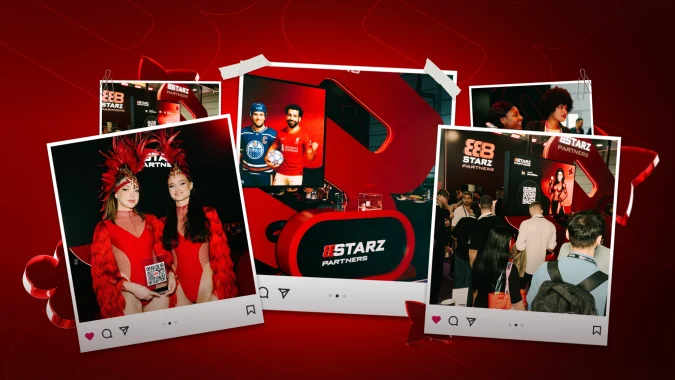
Affiliate marketing keeps changing in 2026. The market looks different, and the rules are no longer the same. AI tools have become standard, and traffic sources are no longer limited to a few familiar platforms. In this article, the 888STARZ Partners team explains how affiliates can still make money in the current environment.
Key Promotion Trends in 2026
The main rule of the market today is simple: adapt or lose. Below are the core directions that will define the affiliate marketing industry in 2026.
AI Automation and Search Results
A few years ago, AI was mostly used to generate texts and ad creatives. In 2026, it directly affects how traffic is distributed. For SEO specialists, this has created new problems – mainly because the way people search has changed.
Search engines like Google now often show AI-generated answers at the top of the results instead of links. As a result, many service websites have already seen a drop in organic traffic. Users get the information they need without visiting any site, which affects both advertising revenue and SEO visibility.
When people see a ready-made answer in an AI block, they simply don’t click further. In 2024, up to 60% of Google searches ended without a single site visit.
Search habits are changing as well. Users increasingly look for information directly in ChatGPT, Perplexity, and similar AI tools. These platforms give clear answers faster, so users no longer need to check multiple websites or watch long videos. For affiliates, this means that classic SEO alone is no longer enough. Traffic now has to be captured from new places – including AI-generated responses.
How to Get Traffic in the AI Search Era

So how to stay relevant in 2026? Here’s the following rules:
- AI doesn’t create information from scratch. It builds answers based on sources it considers trustworthy. Your goal is to make your content easy to quote and hard to ignore;
- Structure pages clearly, use FAQ and How-To schema, and write in a simple “question – direct answer” format. Authority matters more than ever: improve domain metrics, show real authorship, and demonstrate expertise instead of hiding behind generic content;
- Another option is to move even earlier in the funnel. Create your own GPT assistant and publish it in the GPT Store – for example, a bonus finder or a sports analytics bot. Inside its answers, you can naturally guide users toward specific offers. This channel is still new and largely underused;
- Since Google has become less predictable, direct traffic channels deserve more attention. Building Telegram communities, email lists, and short-video channels on TikTok or YouTube Shorts gives you traffic you actually control. For affiliate programs, the key factor here is quality, not volume;
- Reviews also play a major role. Use AI models to analyze public feedback on platforms like Trustpilot, Reddit, Quora, and other niche forums. When users ask questions such as “best casino” or “reliable betting platform”, AI takes public opinion into account. Brands with strong ratings and consistent positive feedback are more likely to appear in AI recommendations.
Postbacks and Conversion Tracking
By 2026, third-party cookies are no longer usable. Postbacks have fully replaced them and are now the most accurate way to track conversions. A postback works through a unique identifier. Every time a user clicks your ad, they receive a unique click ID. If that user later completes a target action, the system recognizes the ID and reports the conversion.
In simple terms, you receive a signal that says: “This user came from your ad and converted”. This data allows you to track performance without relying on cookies.
Mobile Traffic and Short-Form Video
Today, more than 62% of all internet traffic comes from mobile devices. If you’re not there, you’re willingly giving the market to your competitors. Most user attention – and most money – now lives inside smartphones, while short vertical videos have become the dominant content format.
TikTok, YouTube Shorts, and Instagram Reels are powerful traffic sources for affiliate programs – if you know how to work with them.
This format works especially well for iGaming funnels:
- Short, dynamic videos on TikTok or Reels instantly grab attention and scale organically through virality;
- Traffic is then redirected to a pre-landing page or a Telegram channel, where users get more detailed information;
- Installing an app (PWA or native) becomes the core conversion model. The app itself can be promoted further inside Telegram, where you already control the audience.
Users actively share short videos, which means free reach and additional exposure you don’t pay for. At the same time, the flexibility of the format allows you to adapt the same videos for different platforms and GEOs, making short-form video a highly efficient tool.
ASO Is Still Alive – and Still Matters
App Store Optimization (ASO) remains a strong source of organic, high-quality traffic. In simple terms, ASO is SEO for app stores. By optimizing an app’s page – title, icon, screenshots, and keywords – you can rank higher in Google Play and the App Store for queries like “casino slots” or “sports betting”.
That said, ASO is not cheap and usually makes more sense for teams rather than solo webmasters. When working with 888STARZ Partners, you can get ready-made apps for promotion or arrange app adaptation with your manager based on your GEOs and traffic sources.
Users coming from app store search have the highest intent – they are already looking for the product you offer. This type of traffic converts significantly better than paid ads, while a well-optimized app becomes a long-term asset that consistently brings quality leads and reduces dependency on paid traffic.
Why PWA Is a Must-Have in 2026
Progressive Web Apps (PWA) solve one of the biggest mobile web problems – losing users after they close a browser tab. A PWA is a hybrid between a website and an app that can be installed on the home screen in one click, without going through the App Store or Google Play. This matters because it removes one of the main conversion barriers – app installation.
The biggest advantage of PWA for affiliates is push notifications. Once a user installs your PWA, you gain a direct communication channel. From that point on, you can bring users back to the offer repeatedly with messages like:
- “Your daily bonus is waiting”.
- “New slots are live”.
- “Your free spins expire in one hour”.
There are limitations, though. Users must explicitly allow notifications, and on iOS, push notifications only work for PWAs added to the home screen. This means you need to motivate users to enable notifications or install the PWA properly on their iPhone.
Push notifications turn cold traffic into a loyal audience and significantly increase player LTV. However, PWA promotion is not cheap. According to market data, the cost of a ready-made PWA can range from $8,000 to $150,000, depending on goals and complexity.
Relevant Verticals and Offers in 2026

The key question this year is the same as always: where is the money right now? While new niches continue to appear, the classic verticals are not going anywhere. On the contrary, they keep evolving and still offer huge potential for those who know how to adapt. This is exactly what’s worth focusing on – and what this section is about.
The Evolution of the iGaming Vertical
iGaming niche is alive like never before – and it’s not going anywhere. That said, by 2026 the vertical has become more competitive and far more demanding when it comes to traffic quality. We’re seeing rapid growth of casinos offering instant transactions, along with increasing demand for local brands that resonate better within specific GEOs. At the same time, competition has pushed costs up, making high-quality traffic sources more expensive.
To succeed in this environment, you need a partner program built by people who understand these nuances from the inside. That’s where 888STARZ Partners stands out. We provide a full ecosystem designed for efficient long-term work:
- Strong performance metrics. Reg2Dep conversion rates of 35%+, retention above 50%, and an average player LTV of $1,500+ speak for themselves. This is critical for affiliates working on a revshare model and aiming for stable, long-term income;
- Flexible & customized deals. We offer individual conditions that go beyond standard market terms;
- Full affiliate support. 888STARZ Partners provides free, high-converting iOS and Android apps and customizes promotional materials based on your needs.
Stronger Regulation in iGaming – and What It Means
In 2026, regulators in Tier-1 and Tier-2 countries are actively tightening control over iGaming. Germany is a clear example, with its State Gambling Treaty restricting influencer marketing and aggressive promotion of welcome bonuses.
A recent case worth noting is Brazil. After years in a grey zone, the market was fully legalized on January 1, 2025. From that point on, only companies holding a local federal license are allowed to operate.
In practice, this means offshore brands that previously worked in the region are now illegal. Long-term affiliate marketer earnings in Brazil are only possible with partner programs that either already hold a license or are in the process of obtaining one.
Another key GEO this season is Africa – especially Kenya and Nigeria. Local regulators have been active there for years (for example, the BCLB in Kenya), and success largely depends on trust. Players are far more likely to deposit with brands that hold a local license, work with local influencers, and support regional payment methods.
The 888STARZ Partners team offers strong advantages when working with Kenya. Along with licensing, we provide some of the best conditions on the market, backed by exclusive insights and proven case studies.
Financial Products and Crypto: Still Profitable
The finance and crypto verticals remain highly profitable. Microloans continue to show strong conversion rates across Europe and Latin America. Crypto has also moved far beyond simple trading. Today, major opportunities lie in promoting crypto wallets and DeFi platforms.
These offers often run on CPA or lifetime RevShare models, paying affiliates a percentage of transaction fees. In some cases, this can resemble passive income – provided the product retains users.
AI Products and SaaS: Hype or Opportunity?

With the boom in AI tools and SaaS products, it’s easy to see them as the next “gold rush”. Best affiliate programs promise lifetime revshare, audiences seem solvent, and competition looks relatively low. But it’s worth looking at this from a long-term perspective, not just short-term hype.
The reality of the SaaS market is high churn. “Lifetime” commissions sound appealing, but how long does a subscriber actually stay? In SaaS, annual churn rates of 30–50% or higher are considered normal. New tools appear daily, users switch easily, take advantage of free trials, and move on. As a result, “lifetime revenue” often turns into income lasting just two to five months – after which you need to acquire a new user.
Now compare this with iGaming. Tech hype cycles come and go, but the core desire to play, take risks, and win doesn’t disappear. It’s a fundamental behavior that has supported the vertical for decades. Remember the NFT hype?
That’s why truly long-term income is built on quality revshare in iGaming. A player who joins a strong product can stay active and generate revenue for years. This only works when the product itself keeps evolving and retaining users – whether through popular crash games that drive massive engagement or major esports events that attract millions of fans.
The 888STARZ product fits this model. With player LTV starting at $1,500+, retention above 50%, and deposit conversion rates from 35%, it’s built for long-term results. Join us and receive fast payouts through any convenient payment method.
Affiliate Tech Stack in 2026
In 2026, running traffic “on the fly” is no longer an option. Competition is higher, sources are more expensive, and partners are far more demanding when it comes to traffic quality. If your goal is not just testing, but stable scaling, a solid tech stack becomes a must.
Tracking and Analytics
Traffic analysis is the backbone of profitable affiliate marketer work. Without proper tracking, you’re operating blindly.
First of all, tracking FTDs helps you understand where the money actually comes from, not just where clicks are generated. It’s common to push traffic from multiple sources, invest heavily in Facebook, and then realize that real deposits are coming only from Telegram. Or the opposite – TikTok delivers volume, but almost no value. Without a tracker, these patterns are easy to miss.
Second, analytics allows you to optimize campaigns in real time. You clearly see which creatives convert and which simply burn budget, which keywords bring quality traffic and which ones only inflate costs without results.
Advanced Traffic Optimization and Filtering
When data exists but proper tools don’t, analytics quickly turns into noise. That’s why deep traffic optimization and filtering are critical in 2026.
Trackers are the core control tool. They record the entire user journey: traffic source, clicks, actions, and conversions. Keitaro, Binom, and RedTrack remain industry standards, offering built-in traffic filters and flexible routing options.
Web analytics systems like Google Analytics and Yandex Metrica are still essential. They provide valuable insights into user behavior, geography, and audience interests. However, they have a major limitation – they don’t reliably reflect traffic quality. Modern bots easily bypass their standard filters.
When working with CPA networks, you also get access to internal analytics: lead volumes, approval rates, rejected conversions, and payouts. The most efficient setups use postbacks, allowing all this data to sync directly with your tracker.
For larger volumes, dedicated anti-fraud tools become highly relevant:
- FraudScore – a SaaS solution that integrates with trackers and affiliate network platforms and effectively detects bot traffic.
- Forensiq – an advanced system capable of identifying click fraud, cookie stuffing, proxy usage, and VPN traffic.
- TrafficGuard – commonly used with Google Ads to protect campaigns from click fraud and improve media buying efficiency.
Anti-Detect Browsers
In 2026, anti-detect browsers are no longer optional, especially when working with platforms like Facebook or Google. Modern tools such as Dolphin and Octo Browser have evolved significantly:
- OS-level fingerprint spoofing. Instead of relying solely on JavaScript, advanced browsers modify fingerprints at the operating system level, making profiles extremely difficult to distinguish from real users;
- Automation support. Deep integration with tools like Puppeteer and Playwright allows semi-automated account creation, farming, and ad launching at scale;
- Team collaboration. Cloud-based profiles and granular access permissions make it possible for entire media buying teams to work safely with shared accounts.
Scaling Principles and Methods in 2026

Building Your Own Media Assets
Affiliate marketing has always been a race. A setup works today and dies tomorrow. Real long-term stability comes from building your own media assets – sources that generate organic traffic and don’t depend on the mood or policy changes of ad platforms.
In 2026, the most valuable asset for an affiliate marketer is a Telegram channel network. It’s flexible, scalable, and can be monetized for years if built correctly.
A common working model looks like this:
- You launch broad-interest channels designed purely to attract subscribers: memes, viral news, entertainment, 18+ content. Traffic is bought aggressively and at scale;
- The accumulated audience is then redirected into more niche, thematic channels – sports, betting, casinos, or even specific game formats. The audience overlap is usually very high;
- Inside these niche channels, users are warmed up with useful content: match analysis, predictions, bonuses, insider tips. After that, affiliate offers are introduced naturally, without hard selling.
This model scales almost infinitely. Similar audience-building networks can be created not only on Telegram, but also on TikTok or Instagram. However, moderation there is much stricter, which increases operational risks.
That’s why a two-layer structure works best:
- “Collection” accounts – long-living pages focused on gathering subscribers.
- “Aggressive” disposable accounts – shorter life span, higher risk, but designed to quickly redirect traffic to target links.
At the same time, paid capper communities with subscription access remain relevant, as well as a growing trend toward AI influencers – virtual personalities that run channels and blogs, often generating surprisingly high trust and engagement.
Diversifying Verticals and Traffic Sources
One of the oldest and most reliable rules in affiliate marketing is quite simple: never put all your traffic into one basket. That said, diversification doesn’t mean chaos. There are two proven approaches.
- One traffic source = multiple offers. This model works best if you already own a media asset: a Telegram network or a website with organic traffic. Your task is to test different offers on the same audience, ideally within one affiliate program to build a strong relationship with your personal manager. For example, if your network is focused on betting, try launching a separate channel around crash game strategies and test casino offers there. The asset stays yours – only monetization changes.
- One vertical – multiple traffic sources. Here, you specialize deeply in a single vertical, such as iGaming. You understand your audience, know which offers convert, and what users expect. The goal is to constantly test new traffic sources. If Facebook is profitable, allocate 15–20% of your net profit to testing TikTok, Google UAC, or ASO. Always keep a testing budget – it’s an investment, not an expense. When one source starts to burn out, you already have a backup ready.
FAQ
When is CPA more profitable than RevShare in 2026 – and vice versa?
CPA is best when you need quick cash to top up your working capital. It’s also lower risk for you. RevShare pays off when you trust the quality of your traffic – your own SEO, media assets, or community. In 2026, the optimal approach is usually a hybrid model (CPA + RevShare), giving you both fast income and long-term revenue.
How does AI actually affect ROI, and where is it just hype?
AI in 2026 speeds up finding profitable setups and automates routine tasks. This naturally boosts ROI by saving time and reducing testing costs. But remember: AI is not a strategist. It won’t tell you which new vertical to enter or which offer to pick. The idea of a “money button” where AI does everything for you is a myth. AI amplifies your expertise, it doesn’t replace it.
Which traffic sources are dead, and which ones should you target now?
First of all, here’s a list of dead traffic sources: classic click-and-pop, popunders – audience is burned out, banner blindness is real. Organic reach on Facebook? Almost gone – the platform now runs strictly on Pay-to-Play.
So where should you focus? It’s Telegram (build your own channel networks or buy traffic through Telegram Ads), YouTube Shorts and TikTok (huge, highly engaged audience), In-App ad networks (high-quality iGaming traffic), and learning to capture traffic from AI search engines. Don’t forget ASO and PWAs, as covered earlier.
The most common reason campaigns fail when scaling?
Poor cash-flow management is the main culprit. Many affiliates reinvest 100% of their payout back into the active campaign immediately – or worse, spend it. The smarter approach: wait for your payout, calculate net ROI, then split your profit into three parts: your personal income (salary), funds for testing new ideas (money you can afford to lose), the remainder for scaling the campaigns that are already working.
Related articles

 2 min
2 min  4 min
4 min  2 min
2 min  9 min
9 min  10 min
 2 min
2 min 
 2 min
2 min