



What Is Behavioral Factor Manipulation in SEO




SEO in iGaming is one of the few ways to generate large volumes of high-quality organic traffic without paying for ads. In the past, search algorithms focused heavily on keyword density. Today, user behavior has become one of the key ranking factors – how people interact with search results and with the site itself.
Behavioral factors show whether users actually like the content, how relevant it is, how long they stay on the site, how many pages they view, and how they interact with elements. If a site performs poorly on these metrics, some webmasters resort to manipulating behavioral factors. This is an aggressive and high-risk tactic. Once detected, it usually leads to penalties or a full ban. Is it worth the risk, and how does behavioral manipulation work? Let’s break it down with 888STARZ Partners.
What Are Behavioral Factors
Since search engines track user actions both in search results and on the website itself, behavioral factors are usually split into two groups: internal and external:
- Internal factors describe how users behave on your site. They show whether visitors like the content and layout. These include time on site, page depth, navigation behavior, and clicks on internal links;
- External factors reflect how users interact with your site before they actually visit it. These metrics indicate visibility and search demand. Examples include clicks from search results, branded or direct queries, mentions on other platforms, and repeat visits.
Both internal and external behavioral metrics can be tracked in tools like Google Analytics.
By the way, there are two ways to improve behavioral factors: “white” and “grey”. The white approach focuses on improving content quality, site design, usability, and overall SEO. It’s a slow process. Metrics improve gradually, only if everything is done correctly, and without any guarantees. So when fast growth is required, some turn to the grey approach – artificial manipulation of behavioral factors.
What Is Behavioral Factor Manipulation

Behavioral factor manipulation is the artificial alteration of a website’s user metrics. This technique has been around since 2010. What makes it specific is that it can be used both for promotion and for harming competitors.
If manipulation is applied moderately and only to your own site, it may provide a noticeable ranking boost – assuming you are ready to accept the risk. However, large-scale manipulation targeting a competitor’s website often results in ranking drops or a complete ban from search results. This method is especially common in grey niches such as betting and gambling, where search engines intentionally lower rankings, directly affecting organic traffic volumes.
Disclaimer: This material is provided for educational purposes only. We do not endorse manipulating behavioral factors as a promotional method and strongly recommend using white-hat SEO approaches. This helps avoid harming users with low-quality search results and reduces the risk of irreversible Google penalties.
Common Behavioral Manipulation Methods
Several core approaches are used to manipulate behavioral factors:
Bots with advanced behavior
Specialized platforms send bots to your site for a fee to simulate user actions. Basic bots are cheap and unsafe. More advanced solutions combine anti-detect technology, proxies, and behavior scripts to make bot activity appear more human and harder to detect. These setups cost more but are significantly more effective.
Real users
On freelance marketplaces and task platforms, there are offers that pay people to visit specific sites and interact with them. There are also niche platforms built entirely around this model. This method is much more expensive, but safer – traffic comes from real users rather than automated bots.
Custom scripts
An advanced option used by experienced affiliates and site owners. This involves building custom software with integrated components such as human-like bots, proxies, anti-detect tools, and behavior randomization. Manipulation carried out through proprietary scripts is difficult to trace, making it the most effective approach. It also requires serious investment, including developer costs and dedicated server infrastructure.
Risks of Behavioral Factor Manipulation

Behavioral factor manipulation has both upsides and serious downsides, and in some cases, these risks can be critical. Below are the main risks associated with manipulating behavioral factors:
- Search engine penalties – once manipulation is detected, search engines may apply penalties. This can range from ranking drops to a complete ban from search results. To make manipulation harder to detect, advanced bot behavior settings are required, or paid real users must be involved.
- Risk of IP or account bans – in addition to penalizing the website itself, search algorithms may fully ban your account or even your IP address if manipulation is detected. To reduce this risk, anti-detect browsers combined with proxy connections should be used.
- Distorted web analytics data – behavioral manipulation makes proper web analytics impossible, as traffic will mainly consist of bots or paid users rather than real visitors.
- Worsening of real user experience – if a website reaches top positions without having high-quality and relevant content, it will be useless for real users. This leads to lower engagement and reduced conversion rates. To minimize this risk, high-quality services and software must be used for behavioral manipulation.
Top 3 Best Software and Services for Behavioral Factor Manipulation
Let’s take a look at three popular platforms used for manipulating behavioral factors on websites.
BrowserStack
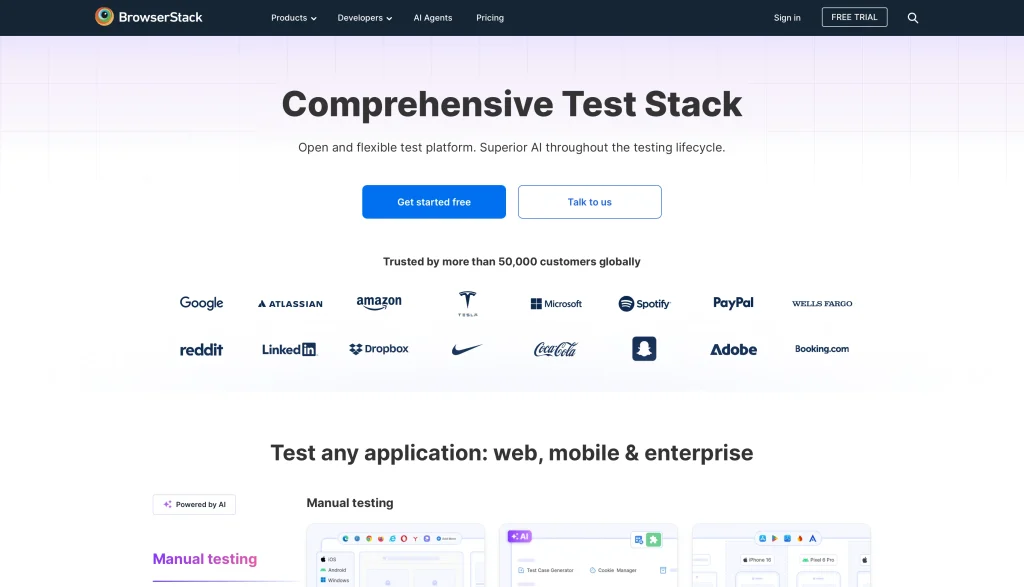
BrowserStack lets you check your site on real devices and browsers without buying a ton of hardware. It’s widely used by QA teams and marketers who want to see how users behave.
What it does well:
- Test on real mobile and desktop devices.
- Works with thousands of browser/OS combos.
- Record sessions so you can see scrolling, clicks, and forms.
Things to know:
- Not meant for generating lots of traffic.
- Can be pricey for small teams (plans start around $39/month).
BlazeMeter

BlazeMeter is great if you want to simulate heavy user activity and test how your site handles it. Perfect for load testing or checking if UX holds up under stress.
What it does well:
- Simulates complex user journeys.
- Supports real browser traffic with Selenium or JMeter.
- Tests sites under peak loads using cloud servers worldwide.
Things to know:
- Needs some technical setup.
- Can be confusing for beginners.
- Pricing depends on how much traffic you simulate.
SmartLook

Smartlook focuses on understanding real user actions instead of just raw numbers. It’s mostly used for improving UX and spotting issues.
What it does well:
- Records user sessions, including scrolling and clicks.
- Generates heatmaps for pages and forms.
- Shows funnels and user flows so you can fix drop-offs.
Things to know:
- Doesn’t generate extra traffic.
- Limited value if your site already has very low traffic.
- Advanced features require higher-tier plans.
Conclusion
Behavioral factor boosting in SEO is often debated, but in practice, it is still used to push websites higher in search results. With behavioral manipulation, you can sharply increase organic traffic volumes or deliberately hurt a competitor’s rankings. The main risk lies in the tools you choose: unreliable software or services can lead to shadow bans or the complete removal of a site from search results.
Not every iGaming platform accepts SEO traffic, but 888STARZ Partners does. We work with traffic from SEO, influencer-driven SMM, and other common acquisition channels, offering high RevShare, CPA, and Hybrid deals – as long as the traffic is real and not artificially generated. For affiliates focused on paid traffic, our team provides localized creatives for specific GEOs and niche-ready PWA applications.
Related articles

 4 min
4 min  2 min
2 min  10 min

 2 min
2 min 
 2 min
2 min  25 min
  5 min
5 min  4 min
4 min